
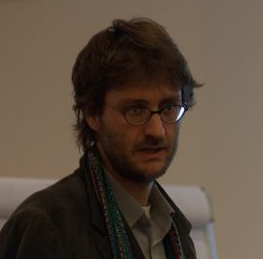
Matteo G. A. Paris is a prominent physicist and full professor at the University of Milano (Università degli Studi di Milano) in Italy. He specializes in quantum information and quantum optics within the university's department of physics, where he founded and (http://sites.unimi.it/aqm), composed by about fifteen persons. His academic focus lies in theoretical physics, particularly in the area of matter models, mathematical methods, and applications. Professor Paris completed his Ph.D. in physics at the University of Pavia, and then was a post-doc in the group "Nichtklassiche Strahlung" of the Max- Planck-Society (Berlin). Before joining UniMi in 2004, he was research fellow of the University of Pavia and research associate of the National Institute for the Physics of Matter (INFM). He is a theoretician working in close collaborations with experimentalists on quantum information & technology, quantum optics, open quantum systems and foundations of quantum mechanics. In these fields he is author of 350+ publications on international journals, which received 21000+ citations, with about 70 invited talks and seminars; his H-index is currently 71 (Google schoolar). His main contributions are in the fields of quantum estimation of states and operations, generation and application of quantum correlations, quantum information processing, quantum walks and algorithms, open quantum systems, quantum metrology and high-precision measurements. In the recent years, he is mostly working in quantum sensing and metrology, continuous variable quantum technology, and quantum walks. He is also active in seeking for novel degrees of freedom for quantum technology, and to improve metrological protocols in the search of new physics.
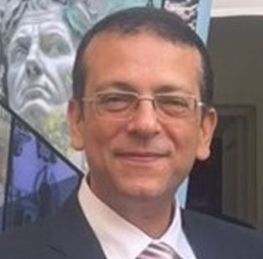
Dr. Ahmed Younes is Professor of Quantum Computer Science at Alexandria University and Alamein International University, where he founded and leads the Alexandria Quantum Computing Group and manages the Center of Excellence for Quantum Computers. He serves as Egypt's representative for World Quantum Day and the Arab States' representative on the UNESCO-endorsed IYQ2025 Steering Committee. He obtained his PhD from the University of Birmingham in 2004, where he introduced the 'Partial Diffusion Operator' technique in quantum search algorithms and amplitude amplifications techniques, and made contributions to synthesis and optimization of quantum circuits, with research spanning quantum algorithms, cryptography, and reversible circuits.
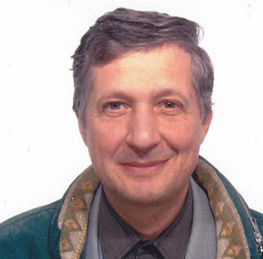
Prof. Marco Genovese In the last 25 years, he grew up a group addressing the development of new measurement methods and techniques exploiting the peculiar properties of quantum states, which is now recognised at the world level and is one of the most important in European Union. In particular, his group gave fundamental contributions to the birth of quantum metrology & sensing discipline, to the foundations of quantum mechanics and to the creation of a metrology for quantum technologies
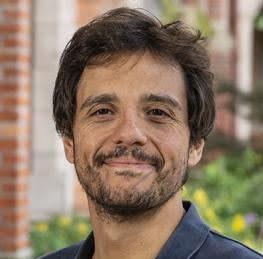
Prof. Mauro Paternostro (Queen’s University Befast) has worked on the foundations of quantum mechanics and the design of quantum technologies for all his academic career. His work has pioneered the fields of cavity optomechanics, quantum communication, quantum thermodynamics, and the foundations of quantum mechanics. He has authored 180+ research papers published in top-tier international journals (including Nature and Phys. Rev. Lett.) and has attracted 7000 citations (h-index = 42) and €9+ Million of research funding from various sources. He is Vice Chair and Grant Holder of COST Action CA15220, of which he was one of the primary proposers. He is Chief Editor of the De Gruyter journal “Quantum Measurement and Quantum Metrology” and served as Editorial Board Member of Phys. Rev. A (2011-2014). He held Visiting Professor positions at Ecole Normale Superieure de Paris (France), Sapienza University of Rome (Italy), Universität Ulm (Germany), and the Federal University of ABC (Sao Paulo, Brazil).
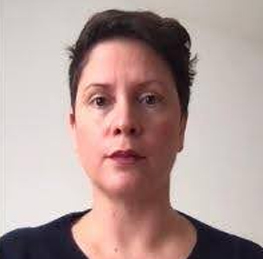
Dr. Ilaria Siloi is a Computational Physicist and Assistant Professor at the University of Padova, where she serves as co-PI within the Quantum Information and Matter group. Her research focuses on quantum and quantum-inspired algorithms for discrete optimization, with particular interest in applications to lattice-based cryptography and industrial optimization challenges. She also works on the emulation and benchmarking of quantum algorithms through tensor-network-based simulators, as well as on the development of compilation and mapping strategies for near-term quantum hardware. She received her Ph.D. in Physics with a specialization in the study of quantum correlations in realistic spin systems and molecular nanomagnets. Before joining Padova, she held research positions in Italy, Finland, and the United States, working on decoherent quantum dynamics and later applying ab initio electronic structure methods for materials design.
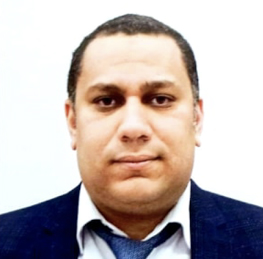
Dr. Ahmed Farouk is a Senior Scientist at Qatar Center for Quantum Computing, HBKU, and Associate Professor at Hurghada University, Egypt. He has published 180+ research papers in quantum machine learning, AI, and cybersecurity with 6000+ citations and H-index of 42. His research focuses on securing networks against quantum threats. He was a top 20 technical co-founder at Creative Destruction Lab, University of Toronto, securing $40K investment. His postdoctoral work covered quantum resources and post-quantum cryptography at Wilfrid Laurier and Toronto Metropolitan Universities. Recognition includes the Egyptian State Encouragement Award, selection for Lindau Nobel Laureate Meetings, and Stanford's World Top 2% scientists list. He serves as reviewer for 40+ journals, chaired IEEE Computer Society Chapter, and is an officer for IEEE's Quantum Consumer Technology Technical Committee. He delivers keynote talks simplifying quantum concepts and supports young professionals in science and technology.
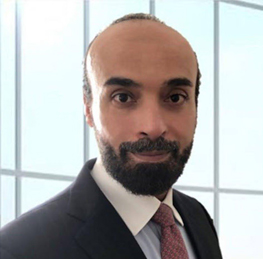
Dr. Ahmed Al Qatatsheh leads the quantum business, including quantum strategy formulation and development, as well as quantum computing and research collaboration for IBM Quantum in the Middle East and Africa. Dr. Ahmed is an IBM Senior Quantum Ambassador and QISKIT Advocate, as well as a leading researcher in material science, nanotechnology, and quantum computing. His research focuses on practical applications in aerospace, automotive, defense, healthcare, and sustainability. Dr. Ahmed has made significant contributions to advancing quantum computing, particularly in addressing computational challenges and exploring new architectures and algorithms in materials science for superconductivity and other material properties. His research in nanotechnology has enabled various applications, including sensing and actuation, as well as carbon capture solutions, that offer innovative approaches to mitigating climate change.
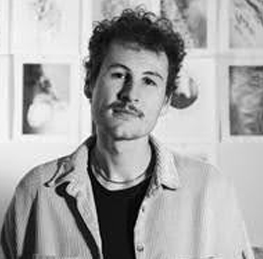
Dr. Alexandre Choquette is a quantum computing professional with experience in academia and industry. At IBM Quantum, he is responsible for driving the adoption of quantum computing across various industries through strategic partnerships and collaborations in Canada and internationally. Alexandre holds a MSc in Quantum Computing from Université de Sherbrooke and prior to his current role he worked as a research scientist at IBM Quantum Zürich and 1QBit.
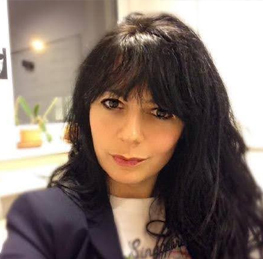
Dr. Voica Rădescu is one of the most influential voices in the field of quantum technologies applied to major global challenges. As the EMEA Lead for IBM Quantum Innovation Centers, Dr. Rădescu develops strategic partnerships between IBM and academic institutions across Europe, the Middle East, and Africa. Under her leadership, the first IBM Quantum Innovation Center in Romania was launched in Iași, within the FreeYa Mind campus – a platform supporting education and research in the quantum field. With a Ph.D. in Physics from the University of Pittsburgh and an outstanding academic and scientific career – which includes CERN, DESY, Oxford, and Heidelberg – Dr. Rădescu is today a key figure in applying quantum technologies for a sustainable and ethical future.
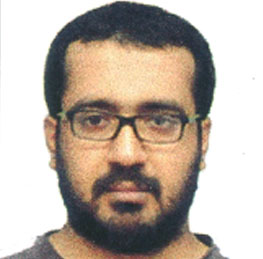
Dr. Manik Banik is an Associate Professor at the S.N. Bose National Centre for Basic Science in Kolkata, West Bengal, India. Before that he served as Assistant Professor at the Indian Institute of Science Education and Research Thiruvananthapuram, Kerala, India. He did his PhD in quantum foundations form Indian Statistical Institute, Kolkata and did post-doctoral research in Quantum Information Science from the Institute of Mathematical Sciences, Chennai, India. Dr. Banik's research explores the deep foundational principles of quantum theory, and utilities in quantum information theoretic protocols. His work on quantum foundations delves into quantum nonlocality, contextuality, measurement incompatibility, and structural derivation of Hilbert space quantum mechanics. His research also includes the study of quantum entanglement, quantum thermodynamics, and devising elegant quantum communication protocols along with various other topics in Quantum Information Science.
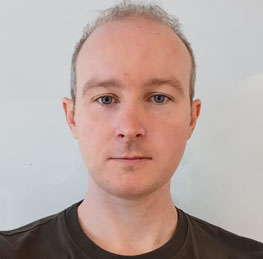
Dr. Michael Hanks received his PhD in 2019 from the School of Multidisciplinary Sciences, Sokendai Graduate University, Japan, with the dissertation ‘Quantum Resource Engineering’. He continues his studies at Imperial College London, as a postdoctoral research associate in the Quantum Information Theory Group of Professor Myungshik Kim. Research interests include the identification of scalable schemes for distributed quantum information processing, and also lowering quantum error correction resource requirements.
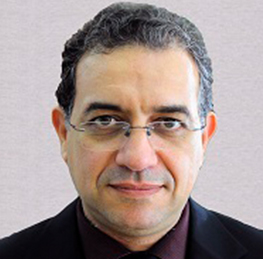
Hichem Eleuch is Professor of Physics at University of Sharjah, UAE. He received his Diplom-Ingenieur Univ. (Electrical and Information Engineering) from Technical University of Munich in 1995. He obtained his PhD in Quantum Physics from Kastler Brossel Laboratory at Ecole Normale Supérieure de Paris (ENS) and Université Pierre-et-Marie-Curie (Sorbonne University), Paris, France in 1998.
He has worked at and visited several prestigious universities and research institutes including Texas A&M University, Max Planck Institute for the Physics of Complex Systems, Princeton University, McGill University, Auckland University, University of Montreal.
Prof. Eleuch has published more than 200 papers in peer-reviewed international journals and holds 2 US patents. He has participated in over 70 international conferences and given more than 40 invited talks. He has refereed articles for more than 50 journals of physics (Nature Communications, Scientific Reports, Physical Review Letters, etc.) and Mathematics (Applied Mathematics and Computation, Journal of Mathematical Physics, etc.). He also reviewed work for MITACS (Canadian Funding Agency). He has successfully supervised and graduated more than 15 (PhD and MSc) students and also monitored several Postdoctoral Fellows.
He has been awarded several fellowships (from the Fulbright Foundation, Max Planck Society, and the International Center of Theoretical Physics, Trieste, Italy). He is also a Fellow of the African Academy of Sciences.
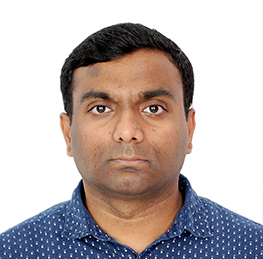
Dr. Narsimha Rapaka is a Research Scientist in Mathematics Department at Khalifa University. His research interests include numerical methods, stability analysis, quantum computing, computational fluid dynamics and heat transfer, geophysical flows, turbulence, and high-performance computing. He received a Ph.D in Engineering Sciences (Mechanical Engineering) from University of California San Diego and held post-doctoral and research scientist positions at KAUST in Saudi Arabia.
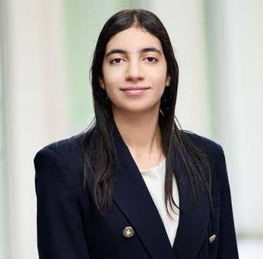
Dr. Nouhaila Innan is a Postdoctoral Associate at the Center for Quantum and Topological Systems (CQTS) and a Research Team Lead at the eBRAIN Lab, New York University Abu Dhabi. She earned her B.Sc. in Physics and Applications and M.Sc. in Physics and New Technologies, specializing in materials and nanomaterials, at Hassan II University of Casablanca, where she completed a PhD in Quantum Machine Learning in July 2024. Her research integrates principled advances in QML theory with systems-level engineering, encompassing algorithmic design, hardware-aware optimization, and end-to-end deployment. It systematically addresses fundamental limitations, device noise, data heterogeneity, privacy, and reproducible evaluation through rigorous benchmarking and application-driven validation. Beyond research, she mentors students and supports international outreach, helping translate complex quantum concepts into accessible, practice-oriented guidance.
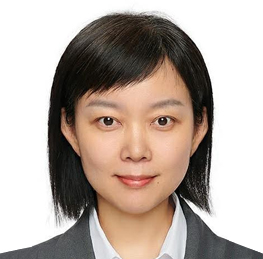
Dr. Xiaoyu Li is an associate professor at the University of Electronic Science and Technology of China.